
Harvest Highlights: The Anatomy of a Perfect Salad
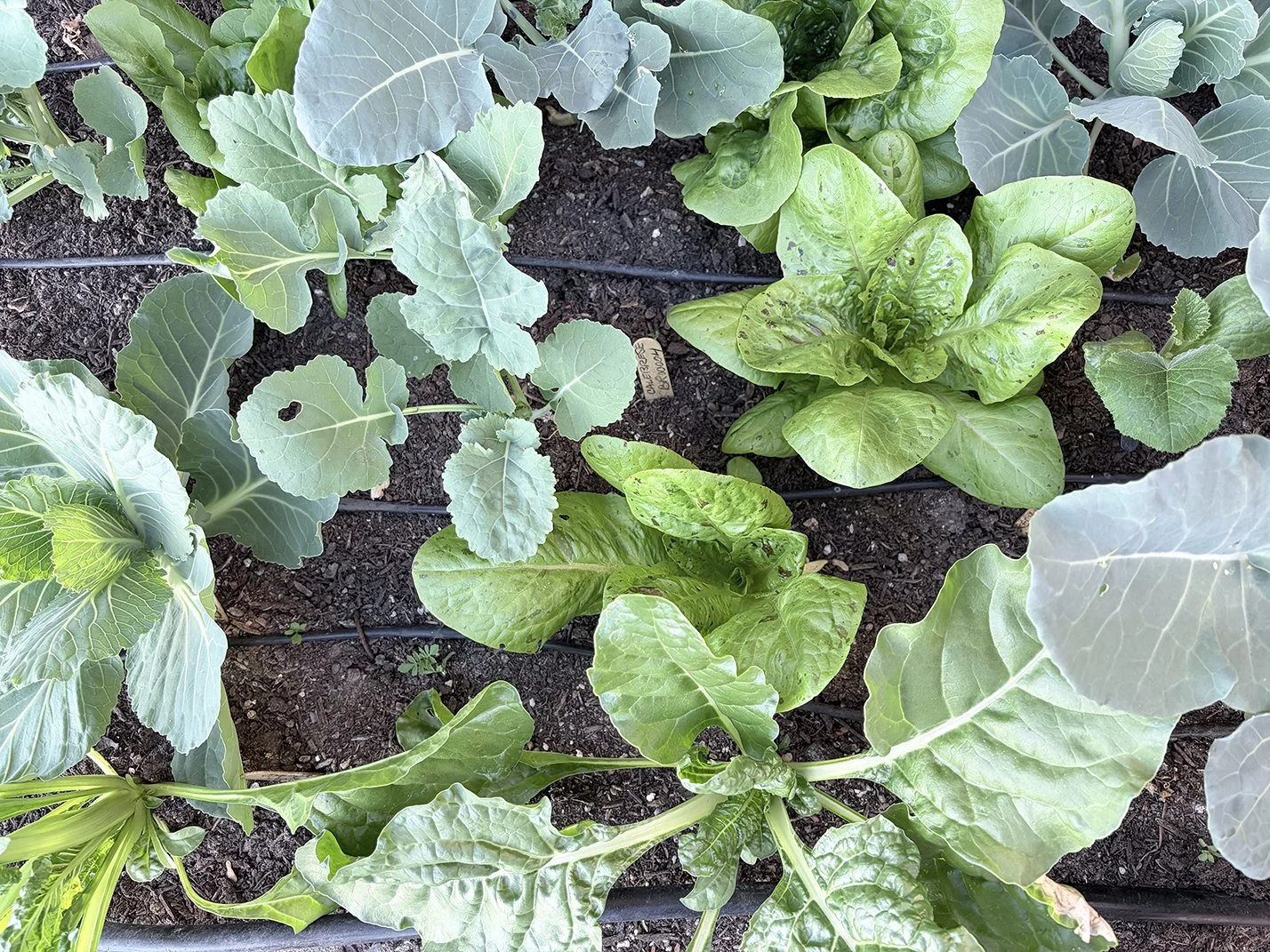
Plant a variety of fresh organic greens. Take a few outer leave from each plant for a range of delicious textures.
A great salad isn’t just a bowl of leaves—it’s an intentional balance of contrasting elements. To get that restaurant-quality crunch from your own backyard, here is my field-tested method for harvesting and preserving your greens:
The Continuous Harvest One of the most common mistakes I see is waiting for a "full head" of lettuce to develop. You don’t need to wait for grocery-store-sized heads for a fabulous harvest. Once your plants are about 6 inches tall, they are ready to work for you. Instead of pulling the whole plant, simply harvest a few of the outer leaves. As long as you leave 3–5 leaves in the center (the "heart") to keep the plant's engine running, it will continue to produce new growth for weeks. This method allows you to pluck a few leaves from a few different varieties all at once, giving you that diverse texture and taste in a single bowl without ever emptying a bed.
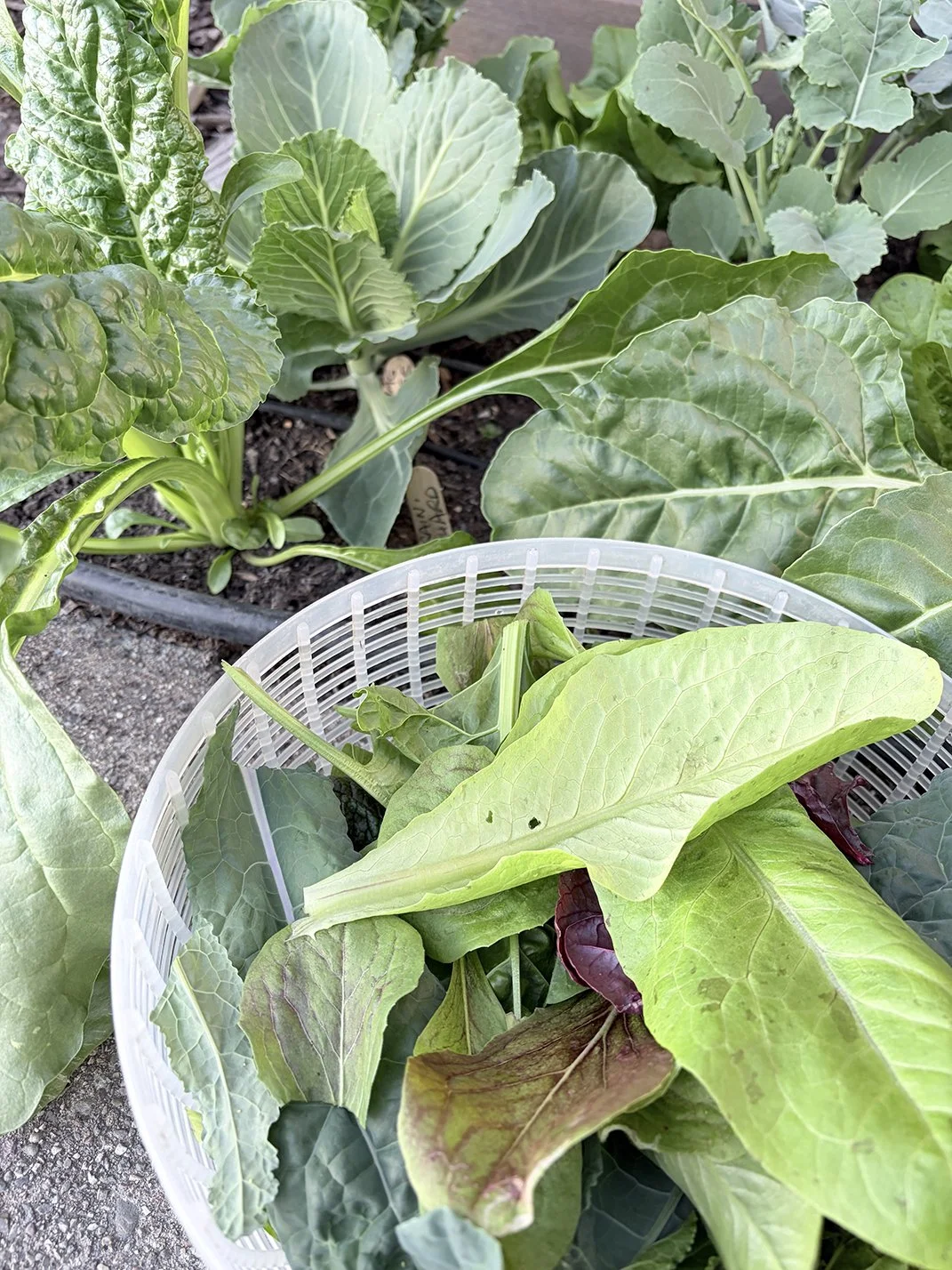
Harvest when outdoor temperatures are cool and the sun is off of the plants.
Beat the "Field Heat" Timing is everything. You want to harvest during the early morning before the sun hits the beds, or late evening after the air has chilled.
Texture & The 20% Rule Aim for a mix of textures—blend the soft, architectural curls of Frisée with the structural, reliable crunch of Romaine. For the perfect flavor profile, keep your bitter elements (like radicchio or chicory) to no more than 20% of the total mix. This adds depth without overpowering the sweetness of your younger lettuces.
The "Weekly Salad Bank" Strategy I don’t harvest daily; I harvest for the week. By picking a week's worth of greens at once, you’re more likely to actually eat from your garden during a busy Tuesday lunch. Process the harvest by cutting away any lackluster or "gross" bits. Only the best makes it into the kitchen. Submerge your greens in a cold-water bath to remove grit and snap the leaves back to life. Spin them until they are fairly dry—excess moisture is the enemy of shelf-life. Ditch the plastic bags. I store my prepped greens in large, flat glass containers. They stack perfectly in the fridge, keep the temperature consistent, and make your beautiful harvest visible so it doesn't get forgotten in the crisper drawer.